ethiopiques
13 Nov 2005[http://www.place.org/~cwage/sounds/Heywete__Tesfa_Maryam_Kidane.mp3] (Tesfa-Maryam Kidane - Tezeta)
[http://www.place.org/~cwage/sounds/Teredtchewalehu_.mp3] (Alemayehu Eshete - Teredtchewalehu)
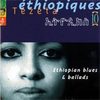
I first encountered Ethiopian jazz, like a lot of people probably have, in Jim Jarmusch’s latest movie, Broken Flowers. Mulatu Astatke has a couple of standout tracks on the soundtrack to this movie (which is otherwise unremarkable, by the way) that I loved.
Not too long after, I also noticed Astatke and other striking music on the stereo at Horn of Africa, as well, on our many excursions out there. So, I poked around emusic for any Mulatu Astatke and found the Buda Musique Ethiopiques set of compilations. I first snagged Vol. 10. and just today snagged Vol. 8 as well, having listened to nothing but Vol. 10 all week.
Volume 10 is Tezeta – Ethiopian blues/jazz. It’s some of the most laid-back, relaxing music I’ve heard in a while. Volume 8, Swinging Addis is a little peppier – a compilation of 60’s jazz, swing and funk that makes you wonder if James Brown didn’t get a little help from some cross-continental influence.
It’s all really great stuff – varied and awesome. I am surprised to know so little about this, but I feel like there’s a whole world of 20th century music self-contained in Ethiopia that I’m just cracking the surface of. There are 20 volumes of this compilation (so far)!